
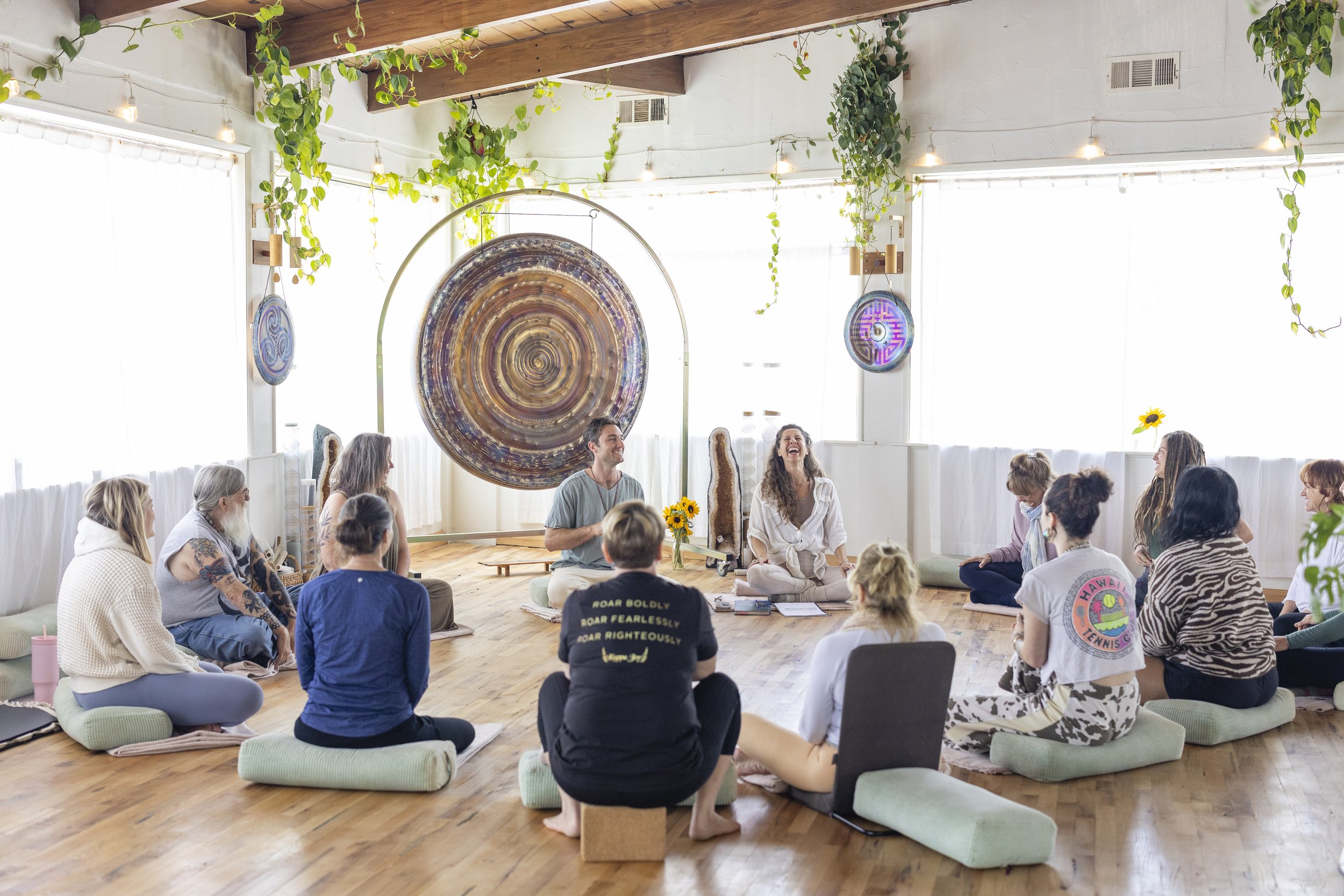
What we actually use in the studio
People ask us:. Which mat? Which bolster? Is the expensive one worth it?
We built this page to share what we’ve learned: what we use in class , what makes a good one, the poses they make possible, and what you can skip entirely. Some of it matters more than you'd think. Some of it you already own in another form.
If you only buy two things
A mat and two blocks. That's a functioning home practice.
Everything else on this page makes practice more comfortable, and comfort matters more than people expect, especially in restorative work and during sound. But you don't need it on day one, and you don't need all of it ever.
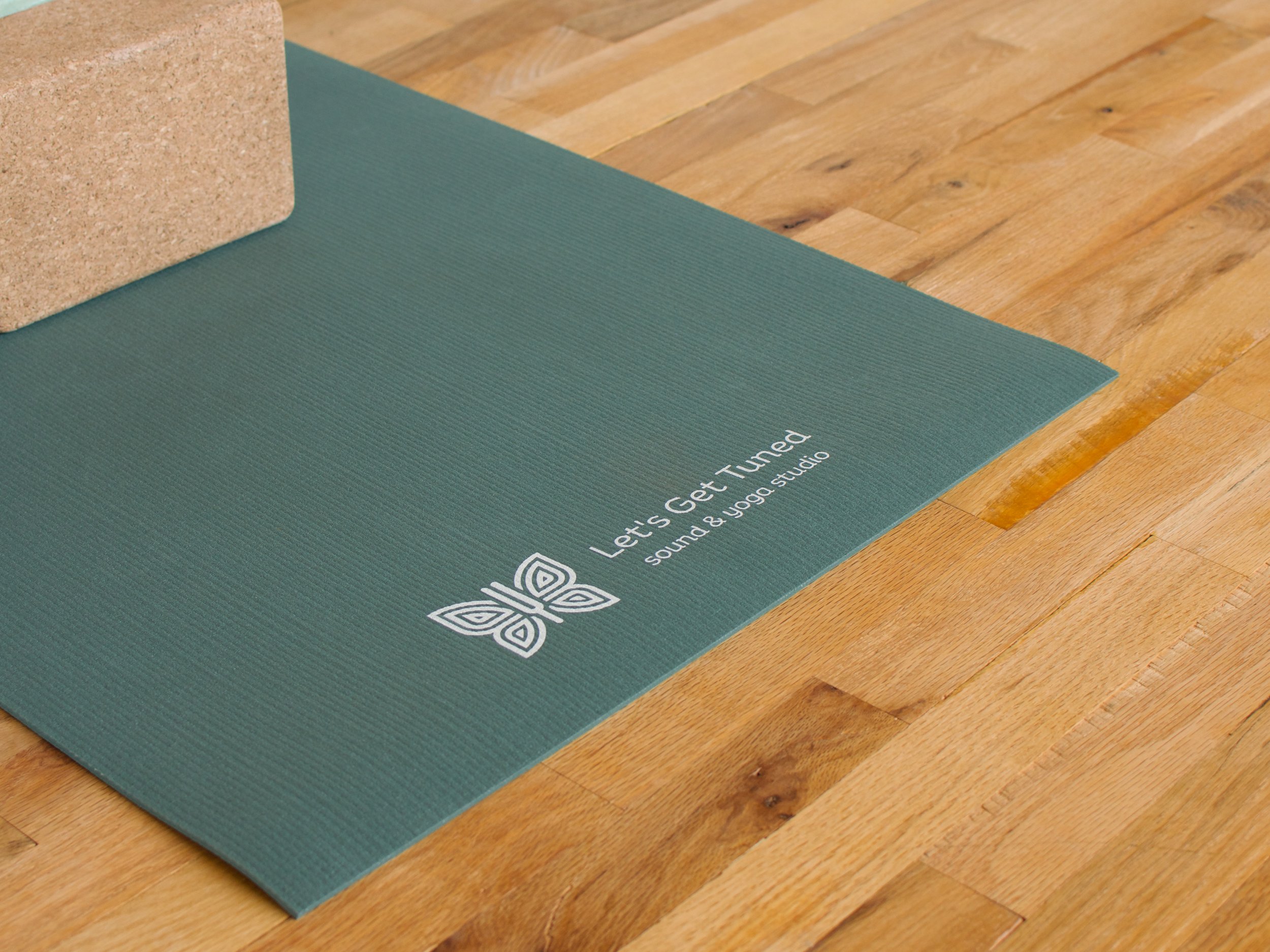
What you can use instead
The premium tier mostly buys you longevity and a nicer surface, not better practice. A mid-range mat replaced every few years costs about the same and you get a fresh grippy surface each time.
A pose it makes possible
Downward-facing dog, held for 3-5 breaths. The long hold is the test — on a mat without grip your hands walk forward and the pose falls apart. On a good one you can stay and breathe.
Mat
What it does
Grip, mostly. A mat’s job is keeping your hands and feet where you put them. Cushioning is secondary and often oversold.
What makes a good one
Grip when damp is the real test — plenty of mats are fine dry and useless once you’ve warmed up. Thickness is a trade-off, not an upgrade: thicker is kinder on knees and worse for balance. Around 4 to 5mm suits most people. Natural rubber grips better than PVC and weighs more. If you’ll carry it anywhere, weight matters more than you think.
What we use
[mat brand and model] — [one sentence on why]
What you can use instead
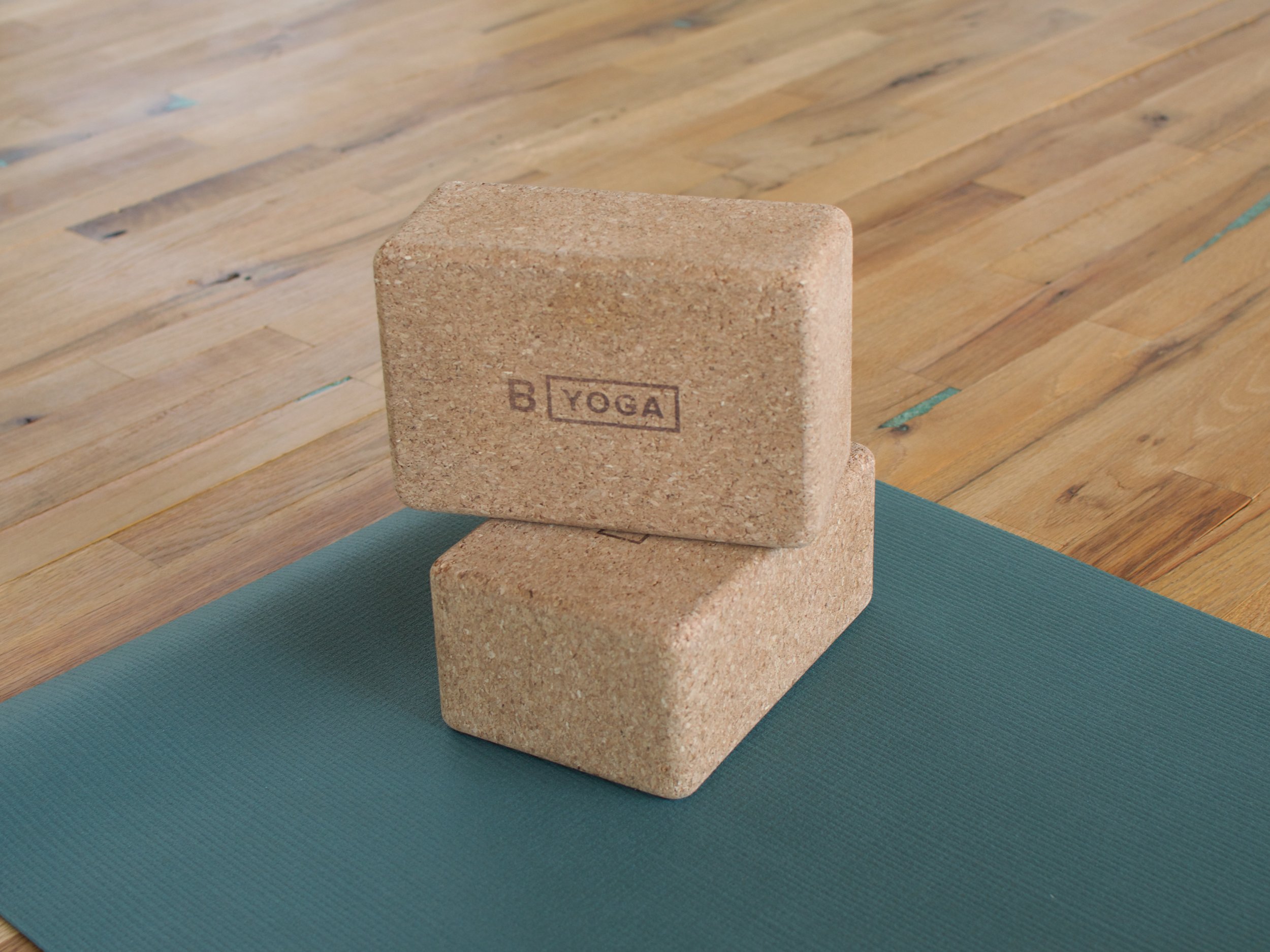
Don’t skip this one if you can help it. Blocks are the highest-value thing on this page and among the cheapest. If someone is buying their first prop, it’s this.
A pose it makes possible
Supported bridge. Lie back, lift the hips, slide a block under the sacrum on its lowest face and let your weight settle. Five minutes here does what a nap does. Without a block there is nothing holding you up.
Blocks
What they do
They bring the floor closer. That’s the whole idea. Most people use them to make a pose available rather than to make it easier, which is a different thing.
What makes a good one
Two, not one. Almost every use case wants a matched pair. Cork is heavier, firmer, and holds up under weight — better if you’ll stand or sit on them. Foam is lighter, warmer to the touch, and fine for most floor work. The standard block gives you three heights depending on which face you use, which is the point.
What we use
[mat brand and model] — [one sentence on why]
What you can use instead
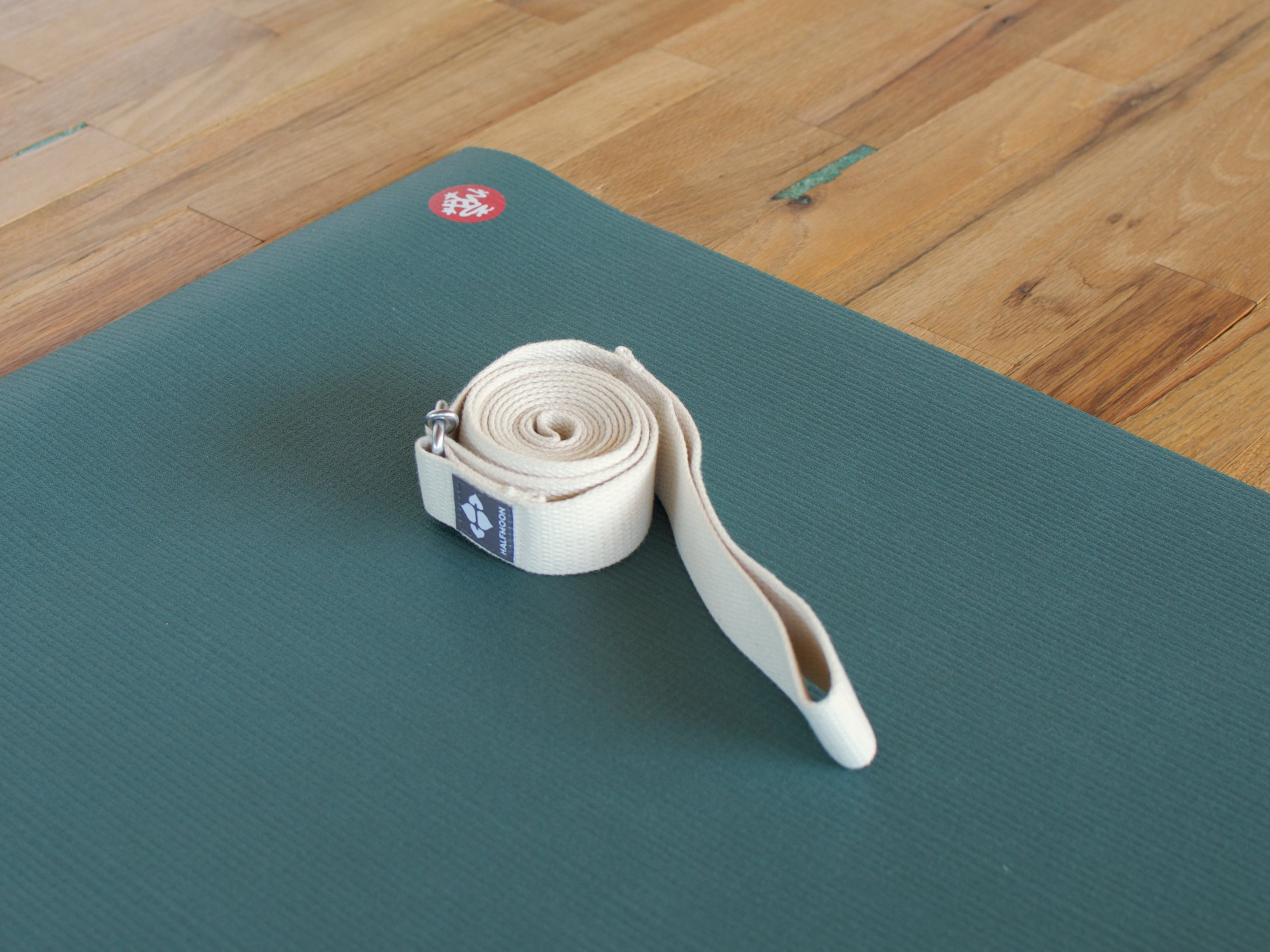
A belt from a bathrobe or a dressing gown does this job. Genuinely. If you’re not sure you’ll use a strap, try it with what you have before buying one.
A pose it makes possible
Supported bridge. Lie back, lift the hips, slide a block under the sacrum on its lowest or medium “setting” and let your weight rest. Five minutes here does what a nap does. Without a block there is nothing holding you up and no consistency between sessions.
Strap
What it does
Extends your reach so you can hold a shape without collapsing to get there.
What makes a good one
Length and buckle. Six feet suits most people; eight if you’re tall or want it for shoulder work. D-ring buckles hold more reliably under load than cinch buckles. Cotton webbing is softer on the hands than nylon.
What we use
[mat brand and model] — [one sentence on why]
What you can use instead
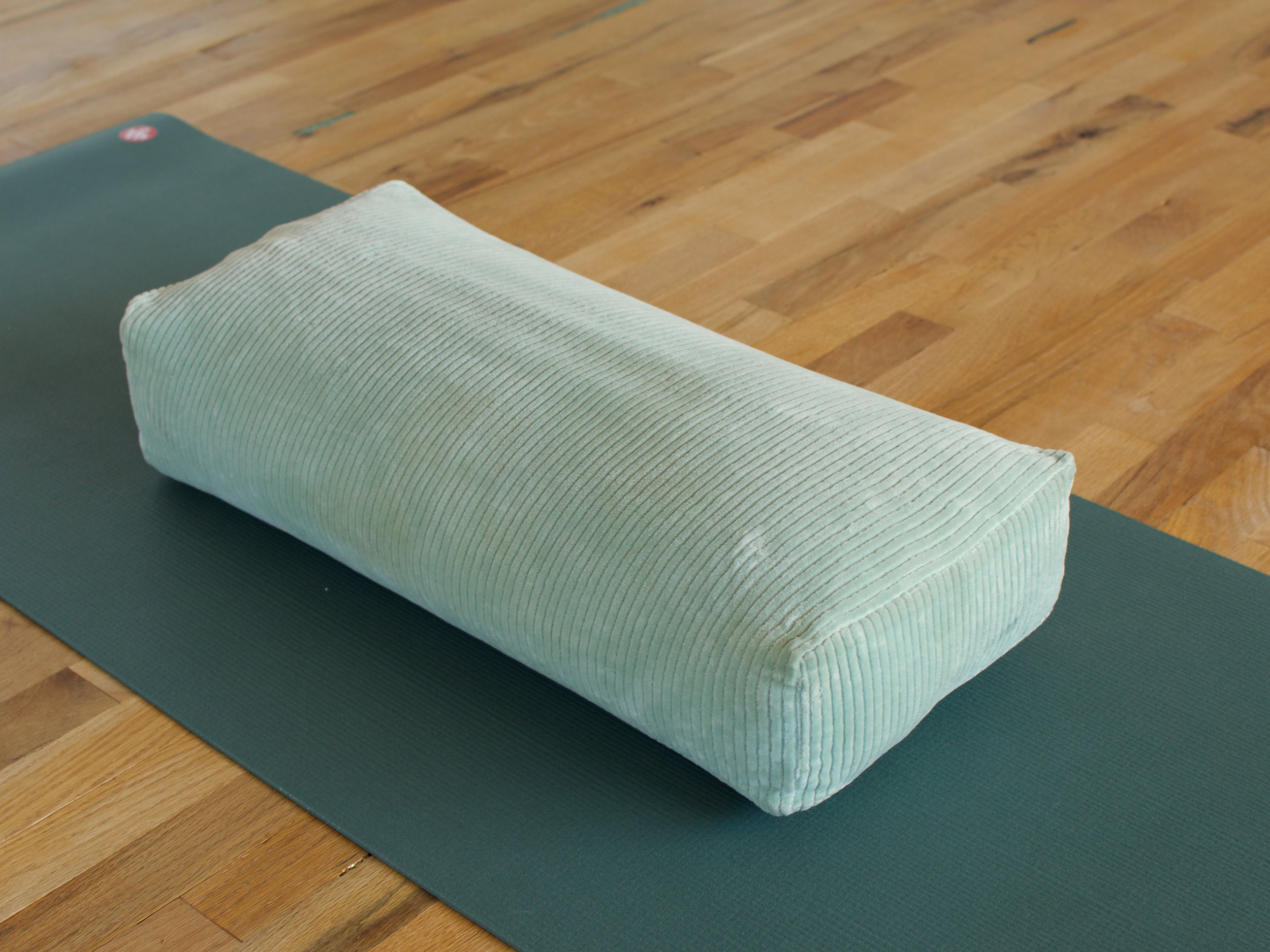
Three or four firm blankets folded into a stack does most of what a bolster does. It won’t be as tidy and it’ll shift, but it works. This is the most expensive item here and the easiest to substitute.
A pose it makes possible
Supported reclined bound angle. Bolster along your spine, soles of the feet together, knees resting wide. Ten minutes. This is the pose people mean when they say restorative, and it needs the height a bolster gives.
Bolster
What it does
Supports weight so your body can stop working. This is the prop that separates a restorative practice from lying on the floor waiting for it to be over.
What makes a good one
Firmness is everything. A bolster that compresses under your weight isn’t supporting you. Rectangular gives you a flat stable surface and more height; round is better under knees and for chest-opening. Removable, washable covers, because these get used constantly. Buckwheat or cotton batting holds shape; polyester fill flattens.
What we use
[mat brand and model] — [one sentence on why]
What you can use instead
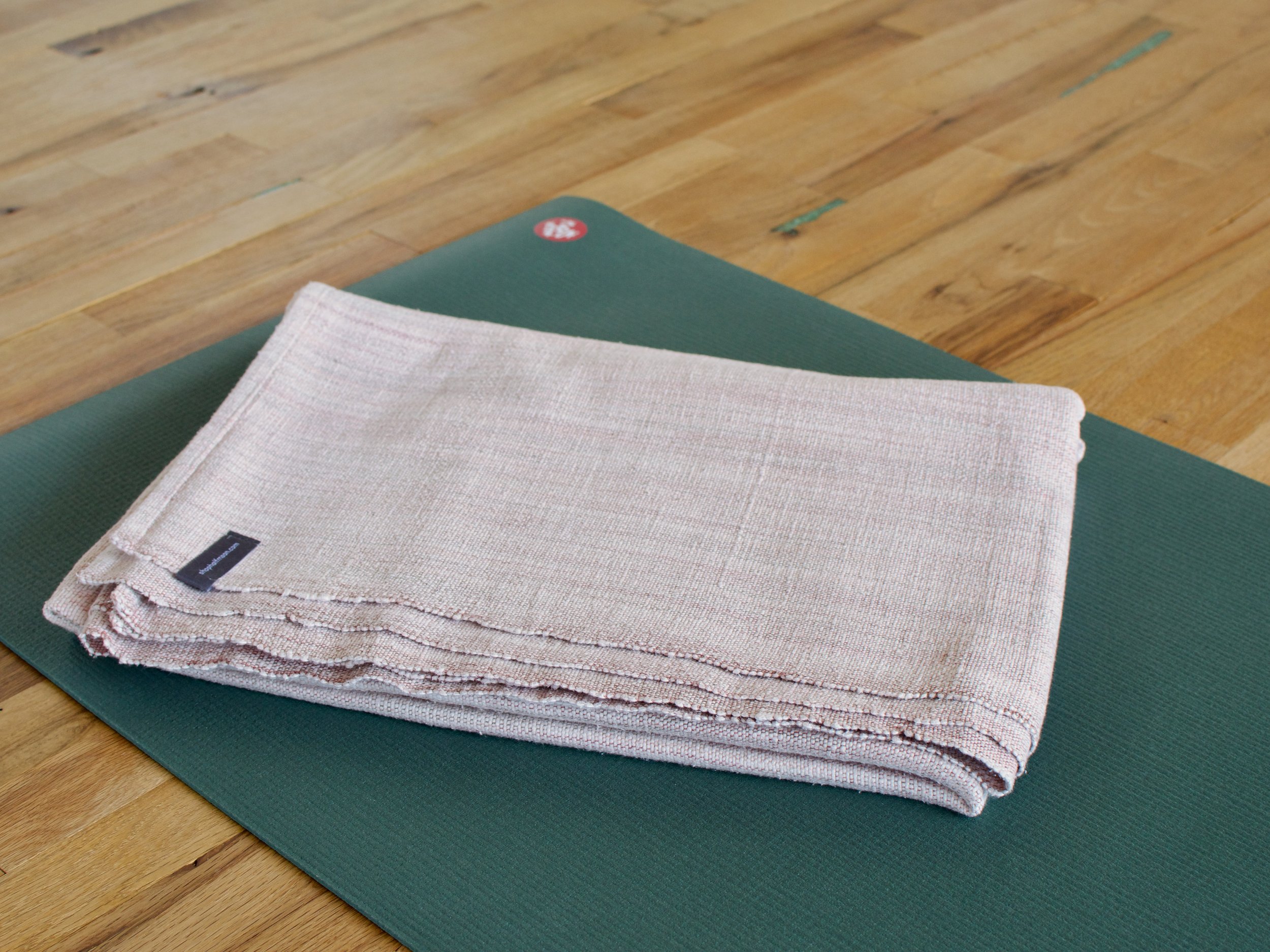
Any dense blanket you own. Mexican-style woven blankets are the traditional studio choice because they’re cheap, dense, and fold well.
A pose it makes possible
Supported fish. One rolled blanket under the shoulder blades, another under the head, arms open. The chest opens without any effort from you — all of it comes from the fold.
Blankets
What it does
More jobs than anything else on the list. Padding under knees, height under hips, a bolster substitute, warmth during savasana and sound.
What makes a good one
Density over softness. A blanket that folds into firm, stable layers is doing prop work; a fluffy one is just a blanket. Wool or a wool blend holds a fold and holds warmth. Size matters — you want enough material to fold four or five times.
What we use
[mat brand and model] — [one sentence on why]
We wrote up the whole thing — what to buy first, what to skip, what to look for, and roughly what to spend. It's the conversation we have most weeks, in about two pages.
It also carries the part that isn't on this page: a short set of restorative poses for each prop, so a mat and two blocks turn into an actual practice you can do tonight.
Send it to me and we'll add you to the studio list. New instruments, workshops, the occasional useful thing. No more than a couple of times a month.
Or just come and use ours
Everything on this page is on the floor in Morro Bay, and you don't need to bring anything to your first class. Try the props before you buy them. That's what they're there for.

When you're ready to make your own sound
Most people find their way here from a class or a sound bath and want to bring some of it home. You don't need a gong for that.
A single chime or a tuning fork is under $200, needs no dedicated space, and does more than its size suggests. It's where nearly everyone starts.